Why exfoliation is on the list at all
Skin sheds dead cells on a roughly 28-day cycle, but pollution, sun exposure and age can make cells build up faster than they shed — leading to dullness, rough texture, enlarged-looking pores, and skincare that can’t penetrate as well as it should. Physical exfoliants (scrubs, brushes) can show fast results but risk micro-tears in the barrier; chemical exfoliants — the acid family — tend to be the gentler, more controllable route when the right one is matched to the right concern.
Water-loving vs. oil-loving is the whole story
- AHA (Alpha Hydroxy Acid): water-soluble, oil-repelling — works across the skin surface, best for dullness, uneven tone and overall texture. Glycolic acid’s small molecule size lets it penetrate furthest; mandelic acid’s larger molecule makes it the gentlest AHA to start with.
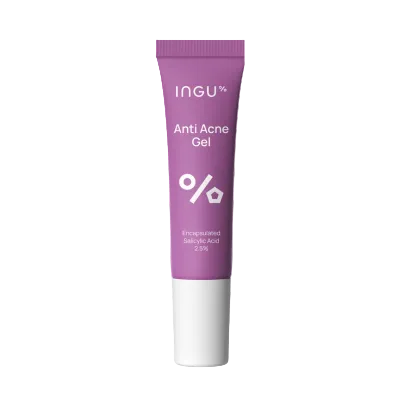
- BHA (Beta Hydroxy Acid): oil-soluble, water-repelling — the opposite profile to AHA, which is exactly why it can travel down oil-filled pores rather than sitting on the surface. Salicylic acid, typically at 0.5–2%, is the main representative, and it carries some anti-inflammatory benefit alongside the exfoliation.
- PHA (Poly Hydroxy Acid): AHA’s gentler, larger-molecule cousin — water-loving like AHA, but too large to penetrate as deep, so it works more slowly and more gently on the surface. Gluconolactone, lactobionic acid and galactose are the usual sources; PHA is often formulated up to around 10%, higher than other acids, precisely because it’s milder.
- LHA (Lipo Hydroxy Acid): BHA’s gentler cousin, sharing its oil-loving, pore-clearing profile but releasing more slowly thanks to what’s sometimes called a “reservoir effect” — a gentler, longer-lasting version of the same job.
Matching acid to concern, not to hype
Acne and congestion respond better to BHA or LHA, since both are built to travel into oily pores. Dullness, uneven tone, melasma and freckles respond better to AHA or PHA, which work at the surface. If a concern needs both, look for a formula that blends the acids in balanced, pre-tested percentages rather than layering two separate acid products yourself — DIY-stacking acids is one of the more common ways people accidentally strip their own barrier.